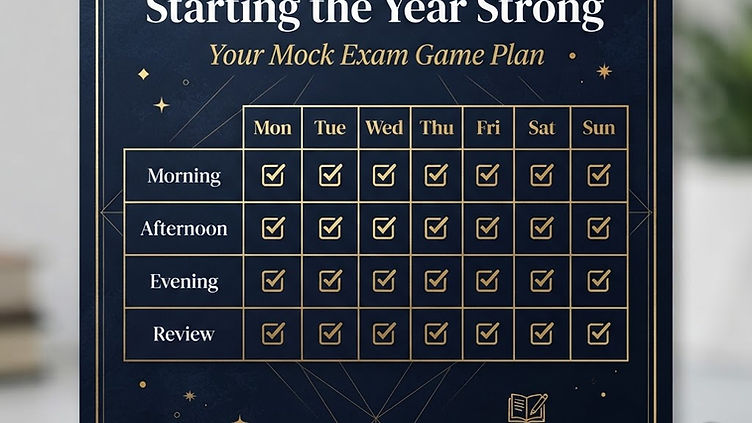
The first few weeks of a new academic year have a funny way of disappearing. New timetables, new teachers, the return of homework, and suddenly it's mid-October. For Year 11 and Year 13 students, that means one thing: mock exams are just around the corner.
Mocks often feel like a dress rehearsal that doesn't really count. In reality, they are one of the most important moments of the year. Your mock results inform predicted grades, shape university references and sixth-form offers, and, crucially, show you exactly where you stand while there is still plenty of time to act.
The good news is that you don't need to panic. You need a plan.
Why the autumn term matters more than you think
Students who do well in the summer rarely get there through a last-minute sprint. They get there through small, steady habits built early in the year. Revising now, while the content is still relatively fresh, means you're consolidating rather than relearning. That is far less stressful and far more effective.
Treat your mocks as a chance to practise not just the content, but the whole process: planning your time, managing exam conditions, and spotting the topics that need more attention.
Five ways to start strong
1. Know what's coming. Find out your mock dates, which papers you'll sit and which topics they cover. Your teachers will usually share this, so if they haven't, ask. You can't plan revision for an exam you know nothing about.
2. Audit your subjects honestly. Go through each subject and sort topics into three groups: confident, shaky, and "I have no idea". This is your starting point. Most of your time should go on the middle and final groups, not on rereading what you already know.
3. Little and often beats cramming. Thirty focused minutes a day will take you further than a frantic six-hour session the weekend before. Short, regular revision allows your brain to retrieve and strengthen what you've learned, which is how information actually sticks.
4. Revise actively, not passively. Highlighting and rereading notes feel productive but rarely are. Instead, try:
- Past paper questions under timed conditions
- Flashcards and self-quizzing
- Explaining a topic aloud as if teaching it to someone else
- Mind maps drawn from memory, then checked against your notes
5. Protect your wellbeing. Sleep, regular meals, exercise and time off are not optional extras; they're part of performing well. A rested brain learns faster and recalls more under pressure. Build breaks into your plan from the start.
The missing piece: a timetable you'll actually follow
Almost every student intends to revise. The ones who succeed are the ones who know exactly what they're revising and when. A clear timetable removes the daily decision-making, stops procrastination in its tracks and makes sure every subject gets fair attention, not just your favourites.
That's why we've created the Academic Edge Revision Timetable. Tell us your subjects, your mock dates and how much time you have each week, and we'll build a personalised, printable revision plan that spreads your workload sensibly and leaves room for rest.
Pair it with our revision guide for practical techniques, subject tips and advice on making the most of every session.
A final word for parents
If your child is heading into mocks this term, the most helpful thing you can do is support structure without adding pressure. Encourage a consistent routine, help them create a realistic plan, and celebrate effort as much as results. Mocks are a learning opportunity, and the feedback they bring is invaluable.
Need a little extra support?
At Academic Edge Tuition, we help students build the knowledge, confidence and exam technique to perform at their best, from GCSEs right through to Oxbridge and Medicine admissions. If your child would benefit from tailored one-to-one support this term, get in touch and we'll find the right approach for them.
Mocks are coming, but with the right plan, they're nothing to fear. Start today, start small, and start strong.